By Rui Xu, Founder of MyHomeScout
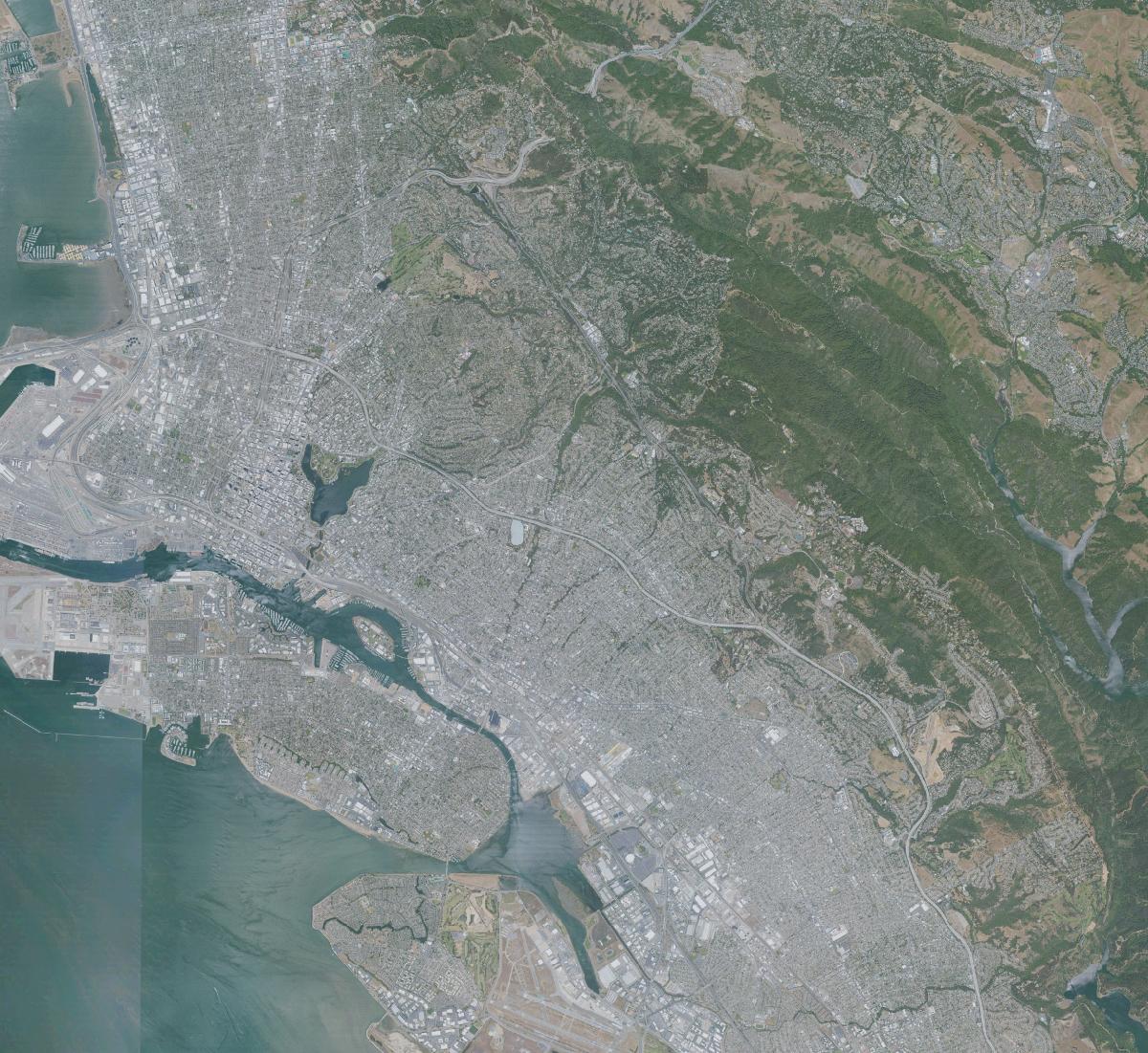
- 64 to 104 vacant properties
- 31 to 63
- 16 to 30
- 8 to 15
- 0 to 7
- 1–10: the ten neighborhoods with the most
- 1. Forestland: 104 vacant
- 2. Prescott: 99 vacant
- 3. Piedmont Pines: 93 vacant
- 4. Claremont: 93 vacant
- 5. Upper Rockridge: 63 vacant
- 6. Montclair: 62 vacant
- 7. McClymonds: 50 vacant
- 8. Chinatown: 46 vacant
- 9. Millsmont: 45 vacant
- 10. Upper Dimond: 41 vacant
Short answer: Oakland charges $6,000 a year on a house, lot or commercial parcel that is in use fewer than 50 days in a year. A separately owned condo or townhouse unit pays $3,000. The charge arrives on the next Alameda County property-tax bill. The City Auditor published the first audit of the tax on July 9, and the City Council received it on October 6. The audit found the city identifies vacant property reasonably well: 1,966 properties were billed for 2024, the most yet. But of $26.8 million spent from $29.8 million collected in five years, two-thirds went to illegal-dumping cleanup and 1% to the Human Services Department. Nobody has filed the annual reports the law requires. Most vacant parcels are empty residential lots, and the neighborhoods with the most are in the hills.
I build MyHomeScout, which sells property-data tools to home buyers and agents. We do not represent buyers or sellers, and no city or property owner paid for this. Every figure below comes from the Oakland City Auditor's audit and its supplemental report, the City Council's meeting record and the city's open data, read on November 19, 2026. No individual properties are named.
- $6,000: a year on a vacant house, lot or commercial parcel; $3,000 on a separately owned condo or townhouse unit
- 1,966: properties billed for being vacant in 2024, the most since the tax began
- $29.8M: collected in the first five years, 2020-21 to 2024-25
- 66%: of the money spent went to illegal-dumping cleanup; 1% reached the Human Services Department
Who pays, and how the city finds them
Oakland voters passed the tax as Measure W in November 2018. A property counts as vacant if it is in use fewer than 50 days in a calendar year. "In use" covers living there and lawful business, civic or religious activity. The rates are the maximums the measure allows:
- $6,000 per vacant residential, nonresidential or undeveloped parcel;
- $3,000 per separately owned condo, duplex or townhouse unit, and per parcel zoned for ground-floor commercial use that sits empty.
The tax follows the vacancy by a year. A property vacant in 2025 is billed on the 2026-27 county property-tax bill, with the same penalties for paying late.
The city pays a consultant, SCI Consulting Group, to find vacant property. For single-family homes it looks at water use and the owner's address on file. For other property it uses building permits, planning files, unpaid trash bills, business-tax records, blight cases, aerial photos and reports from residents. Flagged owners get a notice. Within 20 days they can pay, show the property was in use, or apply for one of the exemptions.
| Category | Flagged as likely vacant | Taxed | Change |
|---|---|---|---|
| Vacant in 2019 (billed 2020-21) | 5,968 | 1,626 | −4,342 |
| Vacant in 2020 (billed 2021-22) | 4,191 | 1,500 | −2,691 |
| Vacant in 2021 (billed 2022-23) | 4,320 | 1,268 | −3,052 |
| Vacant in 2022 (billed 2023-24) | 3,762 | 1,463 | −2,299 |
| Vacant in 2023 (billed 2024-25) | 3,609 | 1,712 | −1,897 |
| Vacant in 2024 (billed 2025-26) | 3,200 | 1,966 | −1,234 |
The gap between the two bars is owners who proved the property was in use or won an exemption. The city flags fewer properties than in the first year and is wrong less often. In the latest year, 26% of flagged owners showed their property was in use, down from 42% at the start. The auditor also photographed 18 properties that looked vacant. Thirteen were in the tax database. Empty houses and condos are the hardest to catch, because from the air they look like any other home and they can still use some water.
Who gets out of it
There are ten exemptions in the code. They cover very-low-income, low-income senior and disabled owners, nonprofits, financial hardship, other hardship, "exceptional specific circumstances," active construction, a building permit application in process and a substantially complete planning application. In 2024 the city granted 407.
| Place | Exemptions granted |
|---|---|
| Building permit application in process | 82 |
| Very low-income owner | 78 |
| Low-income senior owner | 68 |
| Under active construction | 45 |
| Planning application substantially complete | 40 |
| Hardship not about money | 38 |
| Exceptional specific circumstances | 37 |
| Financial hardship | 10 |
| Nonprofit owner | 6 |
| Disabled owner | 2 |
| Next to the owner's home | 1 |
Source: City Auditor's supplemental report, Oct. 2, 2026, Appendix A.
Getting one has become harder. Applications fell from 1,137 in the first year to 656, and the approval rate fell from 85% to 62%. The consultant told the auditor that the hardship categories were hard to define at the start, and that owners often apply on the strength of a building permit or planning application without attaching it.
The audit's case files show the limits of the tax. One vacant lot near a BART station had become an encampment, with dumping and several fires. Its owner was exempted for hardship, because lawsuits had stalled the owner's plans to build.
In December 2025 the City Council changed the rules. It added an exemption for new owners who buy a property during or after the year it was found vacant. It also set a 12-month deadline to contest a vacancy finding or claim a refund, and required hearing officers to state their findings. The audit does not cover these changes.
Where the money went
From 2020-21 through 2024-25 the tax brought in $29.8 million, about $6 million a year, and the city spent $26.8 million.
| Place | Share of spending |
|---|---|
| Public Works (mostly illegal-dumping cleanup) ($19.6M) | 73% |
| Finance (running the tax) ($4.9M) | 18% |
| Housing and Community Development ($1.0M) | 4% |
| City Administrator (homelessness division) | 3% |
| Human Services (homelessness services) | 1% |
Source: City Auditor, Performance Audit of the Vacant Property Tax, July 9, 2026, Finding 2 and Exhibit 11. Shares as the audit states them; they add to 99% because of rounding.
The code requires that at least a quarter of the money go to blight and illegal dumping. That is its only spending floor. The city spent two-thirds there, $17.8 million through the Keep Oakland Clean and Beautiful program. Public Works staff told the auditor that 20 to 25% of that program's work is cleaning up homeless encampments. About $1 million went to the housing department, mostly for a grant for tenant legal services. Running the tax took 15% of revenue on average, the legal limit, and 28% in its first year.
The city's spending of the tax "may not meet community expectations."
Oakland City Auditor, Performance Audit of the Vacant Property Tax, July 9, 2026
The auditor's point is that the resolution putting Measure W on the ballot named homelessness services and affordable housing as its purpose. The city has no measurable goals for the tax and no baseline of how much property sits vacant, so nobody can say whether the tax works.
Oversight has also lapsed. The Commission on Homelessness is supposed to publish an annual report on the tax and has never done so, citing vacancies and missed quorums. State law (Government Code 50075.1 and 50075.3) requires the Finance Department to report each year on what a special tax collects and spends. It has not. The auditor made three recommendations: code administrative costs clearly, set goals and baselines, and file the annual report. The administration said it generally agrees. It will add cost codes and coordinate an annual report. It added that whether owners put property to use is largely outside its control.
Where the vacant property is
The map at the top of this story shows the auditor's count of vacant properties in each neighborhood for 2024. About 2% of Oakland's properties are vacant by the tax's definition.
Most are not boarded-up buildings. Across the six years, the database holds 6,361 records of vacant undeveloped residential land, against 2,569 single-family homes and 1,536 condos. The ten neighborhoods with the most vacant properties hold 696 of the 2,345 in the auditor's table. Forestland, Piedmont Pines, Claremont, Upper Rockridge and Montclair are in the hills. The auditor says hillside land can be hard and costly to build on. Prescott and McClymonds are in West Oakland, and Chinatown is downtown.
Nearly half the properties ever flagged were vacant for a single year, but just over 700 have been vacant all six years. About one vacant property in seven is commercial, and that number has been rising since 2021.
A flat tax in a Proposition 13 state
The auditor compared Oakland with cities that tax vacant property by its value or size:
| Place | Average tax per taxed property (2025 dollars) |
|---|---|
| Vancouver, B.C. (2023) | $23,003 |
| Washington, D.C. (2015) | $18,432 |
| Oakland (2021-22 to 2024-25) | $5,065 |
Source: City Auditor, Exhibit 13. San Francisco's Empty Homes Tax is left out: a court has blocked it.
On a vacant property assessed at $500,000, Oakland charges $3,000 or $6,000. Vancouver charges $15,000. Washington, D.C., charges $25,000, or $50,000 if the property is blighted. San Francisco's Empty Homes Tax would have scaled with a unit's size and how long it sat empty. A court blocked it in 2024, and the city's appeal was still pending when the audit was written.
Oakland's options are limited. Proposition 13 limits any vacancy tax based on assessed value, and most changes to Measure W's rates would need voter approval. Unless voters extend it, the tax ends after the 2040-41 fiscal year.
- Nov. 2018 Voters pass Measure W, the Vacant Property Tax
- 2020-21 First bills, for properties vacant in 2019
- Dec. 2025 Council adds an exemption for new owners and a 12-month limit to contest (Hearing decisions must now state their findings)
- July 9, 2026 City Auditor publishes the first audit of the tax
- Sept. 22 Finance committee hears it and asks for neighborhood data
- Oct. 6 City Council receives the audit
- Dec. 10 First property-tax installment due in Alameda County (Taxes for 2025 vacancies appear on these 2026-27 bills)
- 2040-41 The tax expires unless voters extend it
If you own or are buying in Oakland
- Read the parcel's latest property-tax bill. A vacancy charge shows up there, a year after the vacancy. Ask the seller whether the city sent any vacancy notice.
- Bought a property that was vacant before you owned it? The new-owner exemption added in December 2025 is meant for you. File within 12 months.
- Buying a lot to build on later? Budget $6,000 a year until a building permit application is in process or a planning application is substantially complete. Either one can exempt the lot.
- Leaving a house empty for most of a year? A long renovation without an active permit, or a house between tenants for more than about ten months, can count as vacant.
- Got a notice? Answer within 20 days with proof of use or an exemption application. In the latest year, one flagged owner in four showed the property was in use.
- Low-income, senior or disabled owner? There are exemptions for you. Low-income seniors were granted 68 of them for 2024.
Looking at an Oakland address? Check it free on MyHomeScout, and follow new items on Oakland city hall, which reads the city's agendas every 6 hours.
How we did this
We read the City Auditor's 58-page audit and its 11-page supplemental report for the City Council. We also read the council's October 6 meeting record. All figures for 2020-21 through 2025-26 come from the audit, which used the tax database as of September 15, 2025.
For the map, we took the auditor's count of vacant properties in each neighborhood for 2024 (Appendix A of the supplemental report). We drew those counts on the city's neighborhood boundaries from Oakland's open-data portal, with the same color breaks the auditor used. 128 of 129 neighborhoods matched by name. Acorn has no row and is left blank. The counts are raw numbers, not adjusted for a neighborhood's size.
Limits: the audit does not cover vacancies in 2025 or the December 2025 rule changes. Its spending figures are estimates, because the city's accounts do not mark administrative costs clearly.
Sources (read November 19, 2026): Oakland City Auditor, Performance Audit of the Vacant Property Tax, July 9, 2026; Supplemental report to the City Council, October 2, 2026; Oakland City Council meeting, October 6, 2026; City of Oakland neighborhood boundaries (open data).
Disclaimer:This article is for general information only and is not legal, tax, insurance, or other professional advice. Confirm official records and consult the appropriate professional before you decide.